
「YOKOTA Friendship Day」 唐仁原信一郎
Shin-ichiro Tojimbara
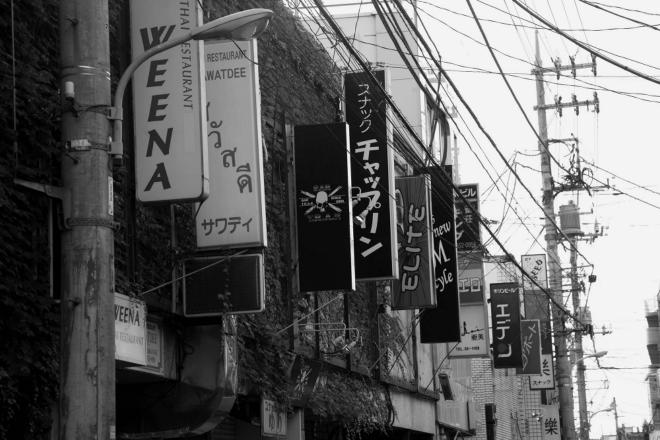

それは私が高校生の頃だった。パンクロックに魅了され、髪を逆立てショットの革ジャンに鋲を打ち、ジーンズを引き裂き、安全靴を履いて街を歩き、ギターを掻き毟ってひたすら叫んでいたのであった。家庭は崩壊し、パンクス達と街を練り歩きタバコを吸い、酒をのみ、ライブハウスでたむろするしか拠り所がなかったのである。
そんなさなか、登下校する国道16号に眼前と立ちはだかる米軍横田基地があった。ベースの向かいにはアメリカ人相手の様々なショップが軒を連ね、夜更けには旧赤線が繁華街として賑わっていたのである。村上龍(地元の人間として私は認めていないが)の「限りなく透明に近いブルー」がはやっていた。
70年代の初期パンクムーブメントはセックスピストルズの〈Anarchy in the U.K.〉に代表されるように思想的には極左になる。従ってU.S.A.は我等にとっては敵である。当時の流行はジュリアナ東京等ディスコが流行っており、福生のディスコでも黒人によるヒップホップに若者たちは酔いしれて踊っていた。ボディコンシャッスのワンピースに皮膚をさらけ出す娘たちは皆若い黒人の男性が目当てであった。我等にとってそれは面白いはずはない。新聞やTVニュースでは毎日のように「バブル崩壊」と告知されていた。
高校を卒業して数日後父が死んだ。私はいよいよ〈さ迷う〉しかなくなった。同級生は工場のラインや営業などに就職していたがそんな〈大人〉には絶対なりたくないと思ってい、写真屋だった父の形見のミノルタとラッキーの引き伸ばし機が目についたのであった。そして手に職をつけようと思って写真学校へ行こうと一念発起したのである。パンクスに別れを告げ、アルバイトをして金を貯めた。
そして入学したのが東京写真専門学校(現東京ビジュアルアーツ)である。当初、私は商業写真を専攻していたが、ある日訳の分からない人物に遭遇してしまった。その人物こそが森山大道である。本来ならば今頃は普通の写真屋としてしあわせな生活を送っていたはずなのに、またもや人生を脱線してしまった。結局、またパンクスに戻ってしまったのである。
話を福生に戻す。改めて福生を垣間見ている今、それらの記憶がまざまざとよみがえるのである。以上書いたように写真家と写真、或いはパーソナリティー、即ち人生とは切り離せないものなのである。記号論やコンテンポラリーアートのようなものがあたかも席捲しているような昨今だが、ストレート・フォトグラフィー(スティーグリッツ)ということを追求している私はそれを「純然たる写真」と訳す。概念芸術にまったく興味はなく、それはあくまで写真家の仕事ではなく、美術家のためのそれなのである。今号で第六冊目のアスファルトであるが、初心に立ち返っても依然として変わらない私の信念を表明する次第である。
It was back in my high school days. I was fascinated by punk rock. My hair was towering towards the sky and my shot leather jacket had nails. With my ripped jeans and safety shoes, I roamed around the city, strummed my guitar and shouted ever-so-aimlessly. I had a broken family; only thing left for me to dowas to walk around the city with other punks, smoke cigarettes and drink alcohol and hang out in live music venues.
U.S. Yokota base was always in my sight on Route16; it was my commuting route. Across from the base, there were many shops targeting Americans and the ex-red light district was a lively area and it was full of people at night. "Almost Transparent Blue" by Ryu Murakami (I do not acknowledge him as a local Fussa person, by the way) was the best seller at the time.
Thoughts of early punk rock movement in the 70s shift towards extreme left, as it is represented by "Anarchy in the U.K." by Sex Pistols. Therefore, U.S.A. was our enemy. The hot trend back then was disco such as Juliana Tokyo and many young people were into black music and they were dancing to hip-hop even at discos in Fussa. All girls in body-conscious one piece, exposing a large portion of their skins were trying to get with young black guys. Of course, this phenomenon cannot be a fun story for us. Newspapers and TV news were reporting "bubble burst" each and every day.
A few days after high school graduation, my old man passed away. I was more "lost" than I was ever before. Many of my schoolmates had found jobs at factory lines or doing sales, but that was exactly the image of "adults" that I didn't wish to be. I looked around and found Minolta camera and photo enlarger left behind by my old man; he was a camera shop owner. I wanted to have a profession in my hand, so I decided to study at school of photography. Said my farewell to my punk rock days and worked various jobs to save up some money.
And, so, I became a student at Tokyo School of Photography (current Tokyo visual arts). Initially, I was studying commercial photography, but one day I ran into a very peculiar man. This man, I later found out, was Daido Moriyama. If I hadn't met him, I would have been living a happy life as an ordinary camera shop worker, but my life has seen yet another derailing right there and then. In short, I said hello again to my punk rock days.
I should go back and talk about Fussa. Now that I am looking at Fussa again in a different state of mind, various memories are coming back to me in abruptmanner. As I have written up to here, you cannot separate photographer to photographs, or personality, or life itself. Semiotics and contemporary art and the like are sweeping over the world in recent years, but I am after what is called "straight photography." I am not at all interested in conceptual arts and this is not a job for a photographer, but that of an artist. This is 6th issue of asphalt, but I would like to hereby express my conviction, which has remained the same even after going back to the original starting point.